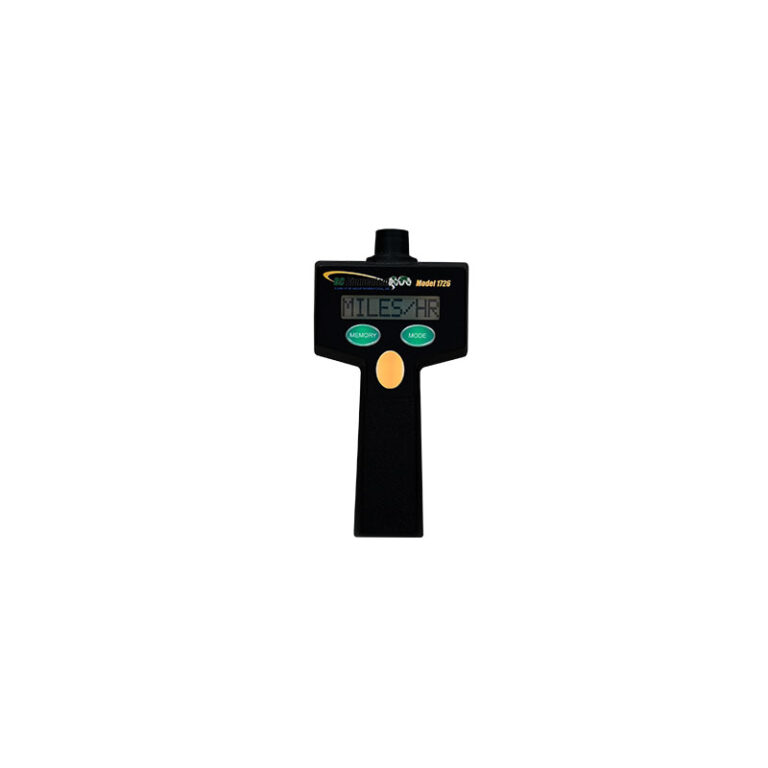
A tachometer is a test instrument used to measure the rotational speed of a spinning shaft, rotor, or platform, usually expressed in revolutions per minute (RPM). In the biomedical field, tachometers are most often used to verify that centrifuges and other rotating medical and laboratory equipment are actually running at the speed they display. Many tachometers used by BMETs are optical, non-contact models: a small piece of reflective tape is placed on the rotor, and the meter reads the speed from a light beam through the centrifuge’s viewing window or with the lid safely interlocked. This allows accurate measurements without touching moving parts.
Speed accuracy matters because many clinical processes depend on it. In the laboratory and blood bank, samples must be spun at a specific speed for a specific time to separate serum, plasma, and cells properly. A centrifuge that runs too slow can produce poorly separated samples and inaccurate test results, while one that runs too fast can damage cells or stress the rotor and tubes. During preventive maintenance, a technician compares the tachometer reading against the set speed and the unit’s display at several settings, and often checks the timer at the same time. The same approach can be used for platelet agitators, mixers, rockers, and other equipment that relies on controlled motion.
Regular tachometer checks also support compliance and documentation. Laboratory accreditation programs, such as those from the College of American Pathologists (CAP), expect centrifuge speeds to be verified at defined intervals, and manufacturers specify acceptable tolerances for each model. Recording measured speeds during inspections gives clinical engineering departments objective evidence that equipment is performing within specification, helps catch worn motors, belts, or speed controllers before they fail, and gives laboratory staff confidence that every sample is processed the same way.